
Ratings
| Ep | Season 1 |
|---|---|
| 1 | — |
| 2 | — |
| 3 | — |
| 4 | — |
| 5 | — |
| 6 | — |
| 7 | — |
| 8 | — |
Peak
Banger
Solid
Cooked
Slop
Episode rating
Trend
Season

Season 1
8 episodes · 2025
No overview available.

Season 1
8 episodes · 2025
No overview available.

1
#1
Apr 24, 202524 min
This new monthly event explores AI creation and questions its limits, uses, and consequences. In this first episode, discover: a short film by Anna Apter, the potential of AI to recreate images of cover-up crimes by Seumboy Vrainom, the therapeutic properties of LSD with Luc Mallet and Mihai Grecu, and a dystopian agricultural fable by Bruce Eesly.

2
#2
May 29, 202521 min
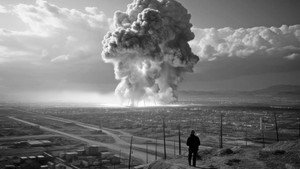
Composer Benoit Carré practices hauntology. Hauntology? Edith Piaf covers Stromae, Brassens covers Angèle, and Dalida does a PNL cover. Photographer Carl de Keyzer published a photo book, Putin’s Dream, without ever going to Russia. He hacked Midjourney with his work on Homo Sovieticus. Raphaël Frydman fulfilled his childhood dream: to uncover the secret of life after death, a journey to a whimsical and poetic island. Kate Crawford and Vladan Joler mapped the dark side of AI: Calculating Empires reveals the invisible face of our digital lives.
3
#3
Jun 27, 202530 min
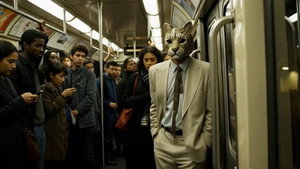
Composer Benoit Carré practices hauntology. Hauntology? Edith Piaf covers Stromae, Brassens covers Angèle, and Dalida does a PNL cover. Photographer Carl de Keyzer published a photo book, Putin’s Dream, without ever going to Russia. He hacked Midjourney with his work on Homo Sovieticus. Raphaël Frydman fulfilled his childhood dream: to uncover the secret of life after death, a journey to a whimsical and poetic island. Kate Crawford and Vladan Joler mapped the dark side of AI: Calculating Empires reveals the invisible face of our digital lives.
4
#4
Sep 25, 202529 min
A fascinating and unsettling encounter with the cyborg musicians of Finis Muscae, a transhumanist music collective in New York. A conversation with Pauline Nadrigny to understand the concept of the cyborg in music. Deconstructing techno-solutionism with Anne Alombert. And discovering a hypnotic, entirely AI-powered short film that makes us travelers in a world of pixels. PhantasIA explores AI creation and questions its limits, uses, and consequences for art and society.

5
#5
Oct 30, 202526 min
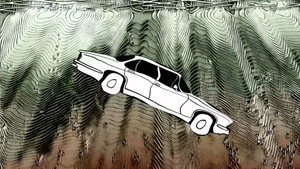
PhantasIA 5 delves into the fragile zones of the human soul. Four explorations where AI technologies intrude upon our emotions, our traumas, our relationship to the world. This issue addresses a fundamental question: what remains of humanity in a world where machines claim to read our faces, our memories, our desires? Through a psychiatric experiment, an intimate documentary, a philosophical primer, and a digital tale, PhantasIA 5 weaves a common thread between art, consciousness, and the mystery of humankind.
6
#6 Death and Ghosts
Feb 6, 202633 min
In the age of generative AI, ghosts are back, and our homes are more haunted than ever. Some of the deceased hire a vigilante to settle their scores. Death capitalism? Technologies exploit our vulnerabilities by simulating death without regard for the bereaved. Sometimes, AI also serves to reconcile and help people accept a sudden death. Grégory Delaplace, an anthropologist specializing in the relationship between the dead and the living, guides us through this haunted house!
7
#7 Deepfake
Apr 7, 202623 min
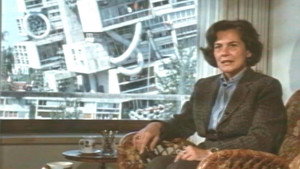
PhantasIA takes deepfakes seriously. Deepfakes are not a crime but part of a 500-year legacy of ruling through images. It shows that the representation of reality has always been a political construct. In Novopolis, Milovan Krleza disappears as a telecom-built city turns against its workers. PhantasIA uses fiction and false archives to question algorithmic life. Citton distinguishes deceptive deepfakes from imaginative counterfactuals; Bodon expands the concept. In Le Havre, Chatonsky trains an AI on city archives to create a ghost city across past, present and future.
8
#8 Decolonizing AI
Jun 9, 202642 min
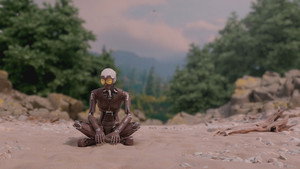
Artificial intelligence can inherit colonial patterns and relies on often invisible labor in the Global South. Can it be reshaped to question identity in new ways? Artists experiment with anti-imperialist models, while philosopher Norman Ajari asks whether AI itself can truly be decolonized.