
Documentary
Seized
Documentary
When the small town of Marion, Kansas, is thrust into the international spotlight after a police raid on the Marion County Record and the death of its 98-year-old co-owner, a fierce debate ignites about the abuse of power, journalistic ethics, local journalism, and the United States Constitution.
A Way Home
Documentary
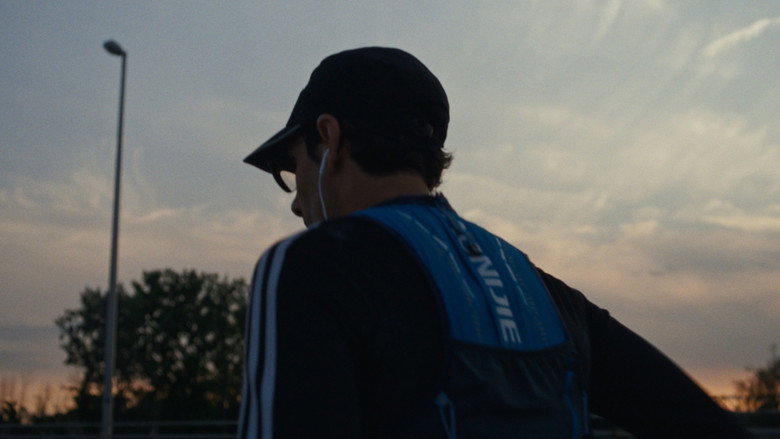
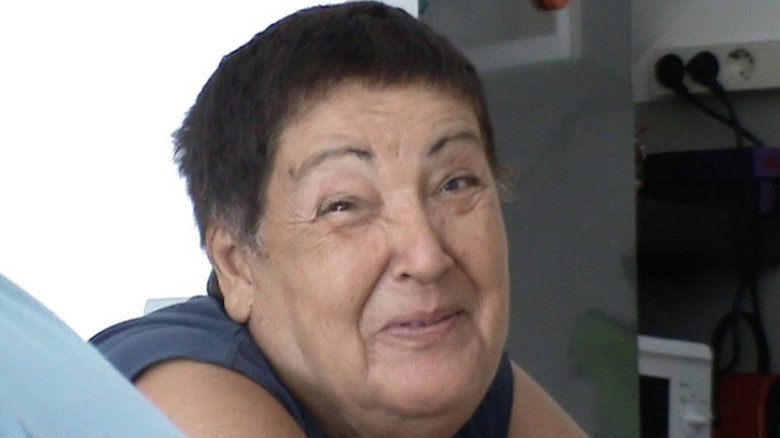
When filmmaker Karima Saïdi’s mother Aïcha develops Alzheimer’s at the end of her life, Karima decides to make a film portrait of her at her Brussels care home. Before oblivion descends for good. Aïcha is becoming increasingly confused, and Karima takes her on mental journey back into her past. The filmmaker uses Aïcha’s stories and a wide range of family archive material to create an impression of Aïcha’s life. We start with her youth in Morocco, are shown how her husband brought her from Tangiers to Belgium, and how she later went on to raise her children as a single mother.
Panorama
Documentary
Panorama is the first chapter of a trilogy on the city. The video is a review on a polis that stretches away over an infinite global space with no more uninhabited places nor frontiers where we can take refuge. In this landscape we cannot see any way of readmission for those who have once been excluded, and this recalls imaginary worlds in search of a balance.
António Sena - A Mão Esquiva
Documentary
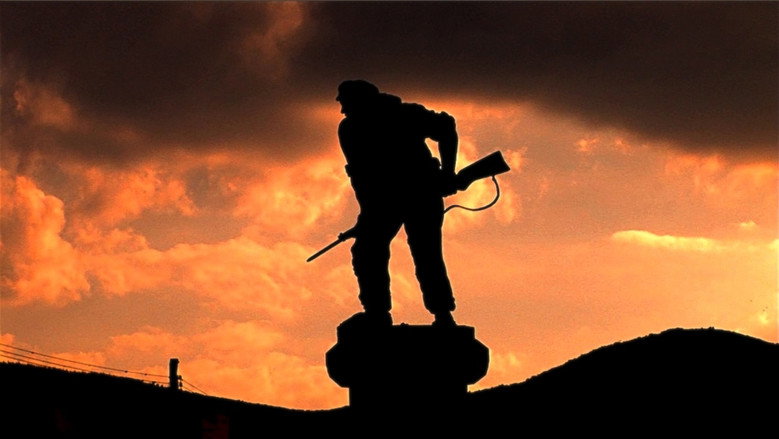
Documentary about the work of the painter António Sena and a way to see the transformation of forms over time
Ricardo Palma
Documentary
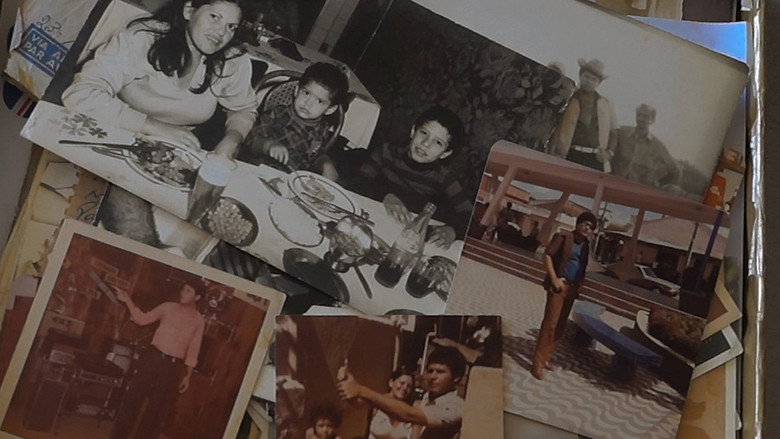
Documentary of the life and work of the notable Peruvian writer and the recreation of an afternoon with the visit of his grandchildren in his mansion in Miraflores in 1919. “Palma is not only the extraordinary writer that we all know he is, if not, a notable model of Peruvianness. “He embodies the spirit of Peru, but not only in his vast and multiform work, but in himself and in his hectic and laborious life.”
The Exhibition
Documentary
An artist faces public outrage as she struggles to mount a large-scale exhibition of paintings based on a police poster of missing women, 26 of whom are found murdered on a serial killer's farm.
Fabric Nation
Documentary
An examination of what it means to own and fly a flag through interviews with flag fliers across the political spectrum.
Krivoluchye
Documentary
Krivoluchye is a district in Tula, but you can’t see the familiar city in this film, it’s a reflection, partly mokeymentari about emigration, - abroad, inside the country or, in the end, deep into yourself. Andrei and Oksana have not seen each other for almost a year and are temporarily returning to their small city, from which both left - he is in St. Petersburg, she is in Paris. They are surrounded by many people, each with their own reasons and ways to live in this touching and almost mystical place with an underground podcast, doppelgangers, a gang on scooters ... The geographical boundaries and the boundaries between the true and the imagined are blurred while the characters look for the answer to the question “why leave? or why stay, ”if you can live like in a movie, directing this reality anywhere in the world.
Citizen Berlusconi
Documentary
All the games and behind-the-scenes of Silvio Berlusconi's power, including politics, media and soccer. Citizen Berlusconi is the original version of the documentary written by Andrea Cairola and Susan Gray broadcast on August 21, 2003, during the Wide Angle program of Thirteen/Wnet New York, the major U.S. public TV station Pbs.
Matterhorn, The Birdwoman's Dream
Documentary
Géraldine Fasnacht is a wingsuit pilote that nurtures a dream since she learned to fly, the dream to be the first wingsuit pilote to jump from the top of the Matterhorn. Technological and technical advances have enabled her, along with her friend Julien Meyer, to achieve this world first on June 7, 2014 .
A Shape of Time - the composer Jo Kondo
Documentary
Jo Kondo (*1947) is one of the most interesting composers of contemporary music in Japan. His music is composed intuitively and at the same time it is highly abstract. Without clear directionality and at the same time not without form. For a Japanese audience it sounds “Western” and in the West it is regarded “Japanese”. A music in between categories. Like Kondo’s music the film is shifting between places and directions: a concert in the Muziekgebouw in Amsterdam, an elaborate sushi bar in Tokyo, a CD-production in a Cologne radio station, the Zuisenji temple in Kondo’s neighborhood in Kamakura. Kondo wants his music to appear “normal”, without spectacular surface or narrative elements. A concept of “normality” you may also find in the films of Japanese filmmaker Yasujiro Ozu, who – like Kondo – spent most of his life in Kamakura.