
Documentary
April in May
Documentary
At Casa da Achada we find a community of people from different contexts that gather daily to celebrate the art and the memory of Mário Dionísio. Here there are those who do the laundry, those who write and read verses, those who sing in the house, those who watch movies and see culture as a way to think and transform life.
The Boy Who Rushed
Documentary
An intimate story about the author's search for her brother who went missing in action during war in Croatia in 1991. In a way, the film is a follow-up of the author's grandmother whose husband was killed in World War II. For the rest of her life the grandmother was awaiting his return. The Boy Who Rushed won numerous national and international awards, including the annual Vladimir Nazor Award for Film. It was shown at more than twenty international festivals. In 2001, it was Croatian candidate for Oscar for Best Documentary Film. The Boy Who Rushed is one of the best and most awarded Croatian documentaries in the past two decades.
Costaleros
Documentary
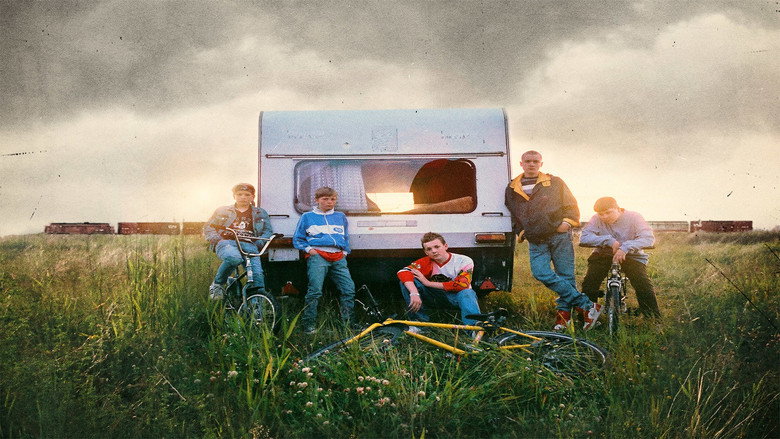
A documentary about the inner, unknown world of the brotherhoods, a universe of its own with its own laws, rules, and philosophy far removed from religion, which were (and in many ways still are) foreign to most people, especially the non-Andalusian majority in Spain. It is the only audiovisual document that captures the pivotal moment for the "people at the bottom" when professional bearers (dockworkers, day laborers, and various other wage earners) are being "pushed out" of the brotherhoods and replaced by fellow bearers. From an anthropological perspective, "Costaleros" projects peculiarities of Andalusian culture that are often misinterpreted and misunderstood from the outside.
Preto & Branco
Documentary
Aedniku talv
Documentary
A gardener won't rest even when the snow covers the ground and there are frozen flowers on the window glass. Now it is time to take part in the meetings and lectures held by the gardening cooperative as well as purchase new tools for the upcoming season. And of course one has to keep checking the gardening patch. Winter is an important time for a gardener to prepare for spring. The film serves as a continuation to TV films "Gardener's Spring", "Gardener's Summer" and "Gardener's Autumn".
Oroboro
Documentary
Felix
Documentary
Felix alone in his apartment. Multiple lanes and syringes of Mephedron and a little G. The filmmaker is watching.

Bachtiar
Documentary
After over a decade in prison, little trace of filmmaker and member of the leading Communist cultural movement Bachtiar Siagian’s life and work could be found, but Hafiz Rancajale still searched. Alongside his colleagues, they revise his mis-slandered history.

Latin Noir
Documentary
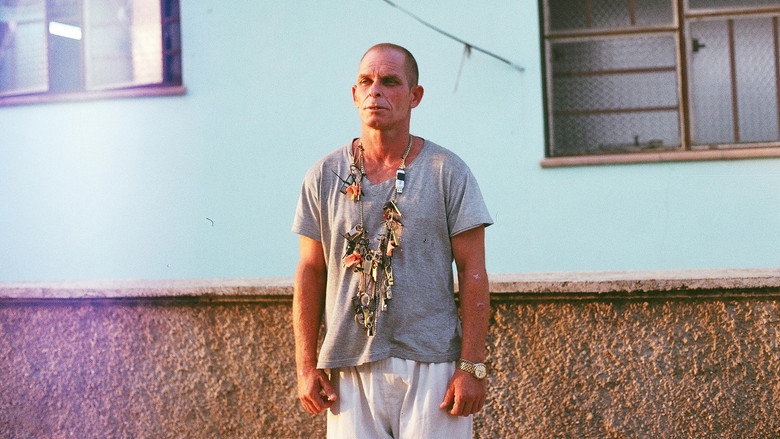
In the land of the Zapatistas, Augusto Pinochet, and Fidel Castro, what are the stories Latin Americans have been telling to confront their troubled past? The film travels to 5 Latin American cities, to meet with famous crime novelists Leonardo Padura (Havana), Luis Sepulveda (Santiago), Paco Ignacio Taibo II (Mexico City), Santiago Roncagliolo (Lima) and Claudia Pineiro (Buenos Aires). Through their stories, we discover a unique genre of flourishing literature, strikingly different from its North American or Nordic counterparts: it's political, dark, and crimes are committed by the state itself.
Egeu
Documentary
Todo Cambia
Documentary
At the end of the 1970s, German Dominican priest Gerhard Pöter began working with Salvadoran civil war refugees. In the parish of 22 April in Soyapango, social projects gradually emerged, mainly in the field of education, which were supported almost from the outset by various groups from Germany and other European countries. Even today, four years after Father Gerhard's death, the social projects continue, as do the lively contacts and exchanges with groups such as the Freundeskreis El Salvador (Friends of El Salvador) from Braunschweig.
Ecseri Lakodalmas
DocumentaryMusic
The State Folk Ensemble has performed the dance game more than a thousand times, and it has traveled all over the world. The short film was shot in Ecser, Gyömrő, Dabas and in the capital, in the studio of Magyar Filmgyártó Vállalat.