
Documentary


(Auto)retrato
Documentary
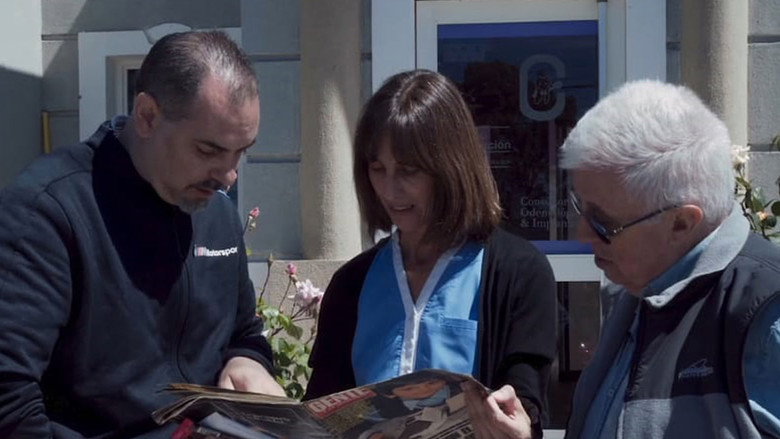
Self-portrait through the acts of love by the other, in this case, Chloe's mother.
Magda
Documentary
A young German girl Magda Homann was destined to fall victim to two World Wars at once, Kaiser's Germany and Tsarist Russia, the Hitlerite and Stalinist regimes. Having started a new German-Ukrainian history, she falls into the hands of the NKVD and her trail is mysteriously lost. But the search for Magda Homann by her German and Ukrainian grandson continues 70 years later.

What Does Bosnia Mean to You?
Documentary
A young woman caught between love and an opportunity to study abroad; one lost wallet and a chance encounter that opens the possibility of reconciling the past and the present; two friends facing diverging choices and futures; and a call that brings two strangers together make up the four stories set against the Sarajevo skyline and told by women and of women, living in BiH today.
Philippe-Alain Michaud, le réel traversé par la fiction
Documentary
To be in Venice and see the architecture of New York, to perceive in a painting by Tintoretto the birth of animated images, to look at the burlesque Cretinetti as the ancestor of montage - so many shifts, displacements, and striking telescopings that Philippe-Alain Michaud proposes in this film dedicated to him. To follow this art historian, curator of the cinema collections at the Centre Pompidou, is to go from the oriental carpet to the film, or from the first fireworks to the cinema. And everywhere the animation of the images - projections of Antony McCall, or of Paul Sharits, Column without end of Brancusi, Pasolini's Accatone - everything moves! Under the tutelage of Aby Warburg, the great art historian of the early twentieth century, precursor of iconology and image comparison, to whom Philippe-Alain Michaud was the first in France to devote an important essay, eleven images are placed on the table to describe the singular journey of this art historian.
Fluor Film
Documentary

To Kill or To Be Killed
DocumentaryMusic
Between rhymes, beats, and archival footage, three “MCs” talk about their experiences in the rap battles that take place in downtown São Paulo (Brazil) and reflect on the role of these artistic encounters as a form of expression, entertainment and representation.

American Coup
HistoryDocumentary
AMERICAN COUP tells the story of the first coup ever carried out by the CIA - Iran, 1953. Explores the blowback from this seminal event, as well as the coup's lingering effects on the present US-Iranian relationship. Includes a segment on the 1979 Iranian Hostage Crisis and its relation to the 1953 coup. Concludes with a section on the recent Iranian presidential election. Contains interviews with noted Middle East experts and historians and prominent public figures such as Stephen Kinzer (author, All The Shah's Men), Prof. Ervand Abrahamian, Trita Parsi, Col. Lawrence Wilkerson, Ted Koppel and Rep. Ron Paul of Texas. With Iranian cinematography by James Longley.
Берегите хулиганов
Documentary
The film, written by Roman Super and Ivan Proskuryakov, tells about the only circus in the world where difficult teenagers learn circus art and become real artists. Using its example, the Uppsala Circus project shows how creativity can give children the opportunity to live more interesting and successful lives. The film makes it clear to teenagers that there are places where they will be welcomed, and people who are ready to understand and help.
(Des)controle: o Ministério Público no Centro das Atenções
Documentary