

Documentary
P
Palma 11
Documentary
T
The Quest Fulfilled: A Director's Vision
6.42003
DocumentaryTV Movie
Making of The Lord of the Rings: The Return of the King.


O
Our Home
2020
Documentary
I have been living in Europe since 2002. I went to Korea with my one-year-old son in 2016 to see my parents after a long time. While staying at my parents' house, I sent my mother, who was suffering from Parkinson's syndrome to a nursing home with the intention of helping my father. This story is about the point where generations intersect. At the point where my son was starting to learn to walk, and her mother was starting to forget her walking.
T
The Crumbling of America
7.02009
Documentary
Throughout world history, great civilizations have survived and extended their rule through dependence on great infrastructures. Rome had its roads and aqueducts. The Mayans had their pyramids and palaces. But what happens when society neglects its infrastructure? Right now, the U.S. infrastructure is collapsing and it impacts every single person in this country. In the first half of the 20th century, our bridges, highways, tunnels, dams, levees, ports, water and gas pipelines were built during the greatest age of construction the world had ever seen. But now these steel and concrete achievements are deteriorating. More than 70,000 of our nation's bridges are rated structurally deficient. Massive grid failures have left millions in the dark. 25,000 miles of commercial navigable waterways and locks have exceeded their 50-year design life. Everything from dilapidated levees to pipelines to railroads is past their expiration date.
A
Aleš's Year
10.01953
Documentary
Within the cultural policy framework of the 1950s, Mikoláš Aleš was, in terms of fine art, equivalent to Bedřich Smetana in music and Alois Jirásek in history and literature. This biopic presents Aleš as an artist of a devoted to his nation and its folk traditions. The movie depicts the most important events of the celebration of “Aleš’s Year” (in honour of the hundredth anniversary of Aleš’s birth), which was conceptually prepared first and foremost by the then education minister Zdeněk Nejedlý, who was also a crucial figure in terms of cultural policy.

O
Oumahat
2020
Documentary
In Morocco, unmarried women who become pregnant risk a prison sentence. They often don’t even dare to tell their families, for fear of exclusion and rejection. The Oum El Banine association in Agadir is there to support them, under the inspiring leadership of 62-year-old feminist Mahjouba Edbouche. She takes the girls and women under her wing, providing shelter, education, and legal assistance. To try and secure them a safe home, she also seeks ways for the young mothers to mend the relationships with their parents.
O
Ostrich Theory
2020
Documentary
A take on public indifference to troubled times. Pre-pandemic documentary footage, digitally depopulated and reorchestrated frame-by-frame before lockdowns became reality.
P
planet v
2024
Documentary
Fidgeting fish, dancing on the train, big stages – we scroll through a phone gallery. How do you find your own identity between ever-changing trends? When do the borders between real and virtual life blur? A documentary about a self-made musician who wants to stand her ground in a digital world.
C
Copihuito
1977
Documentary
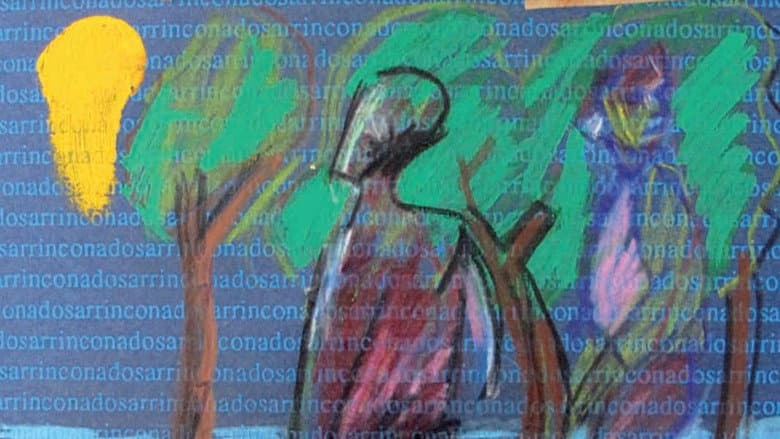
This color documentary reports on young Chilean pioneers in the capital of the GDR. We experience the development of their pioneer newspaper from the first ideas to the printed new edition. Pictures by the Chilean painter César Olhagaray depict the struggle for freedom and the hopes of the Chileans, accompanied by excerpts from Pablo Neruda's "The Great Song" (Canto General).
F
Fatality
9.02023
DocumentaryComedy
Pasha and his mischievous friend Dan arrive from their provincial hometown to Moscow. Chasing a dream of a whole new adult life, they get to meet the city crew of graffiti writers. Being inspired by the coolest street artist of the city, Pasha starts naively dreaming of becoming a part of his crew. For the sake of achieving the goal, he's ready to make it as far as possible.
T
The French as Seen by…
6.91988
WarDocumentary
In 1988, Figaro magazine asked a few famous directors to direct a series of short movies to celebrate the 10 years of the revue. The movies have been released for the French revolution bicentenary. Includes: Werner Herzog's Les Gaulois, David Lynch's The Cowboy and the Frenchman, Andrzej Wajda's Proust contre la déchéance, Luigi Comencini's Pèlerinage à Agen, Jean-Luc Godard's Le dernier mot.
T
The Term. Beginning of a Big Story
4.22014
Documentary
The documentary project The Term was conceived in May 2012. When the directing trio commenced mapping the Russian sociopolitical landscape, Vladimir Putin had just settled into the Kremlin for his third term. The original experimental format of “documentary bulletins,” which were published daily online, allowed for wide-ranging content; in the feature film version, however, the filmmakers focused solely on the members of various opposition groups. Nevertheless, the work’s neutral position remains and viewers have to interpret the objectively presented situations for themselves. The main characteristics of this strongly authentic movie include close contact with the protagonists, precise editing, and an effectively controlled release of information.